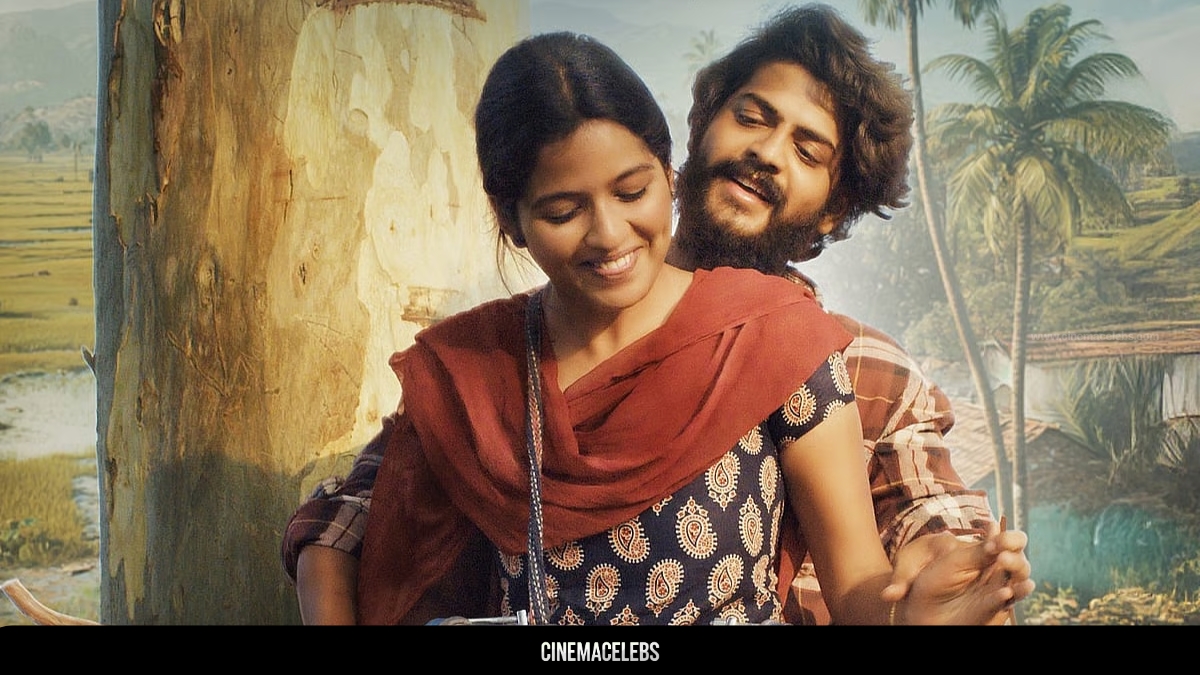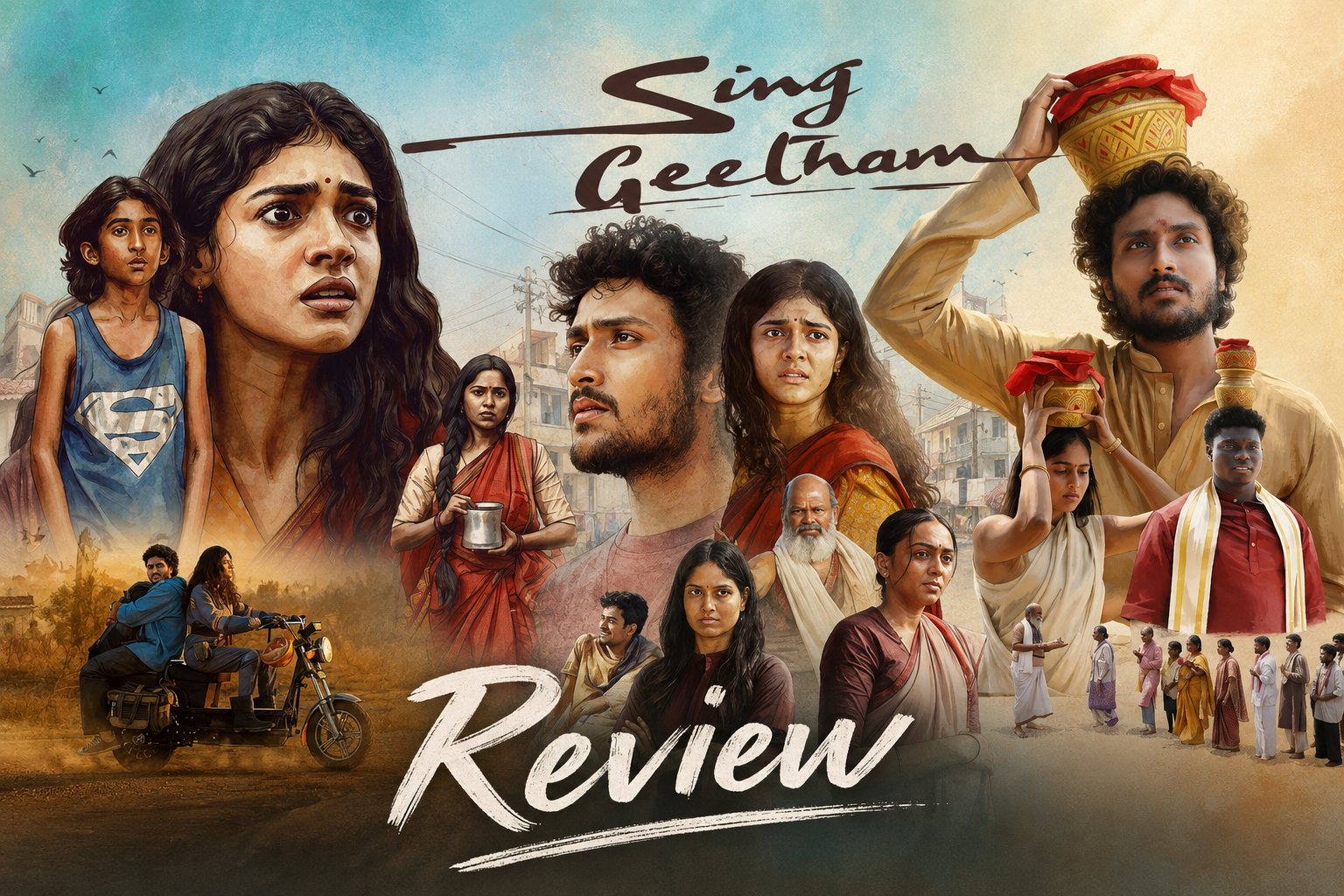
Sing Geetham is a Telugu musical fantasy now playing in theatres, and it is worth watching if you go in for the concept rather than a tight story. The pull here is the gamble itself. An entire village stops speaking and starts singing, and the film commits to that bit for its full runtime. The first half tests your patience and the second half pays you back. If you want something that does not look like anything else in cinemas this month, this is it.
| Detail | Info |
|---|---|
| Movie Name | Sing Geetham |
| Language | Telugu |
| Theatrical Release | June 12, 2026 |
| OTT Release | Not announced |
| Platform | In theatres |
| Audio Languages | Telugu |
| Cast | Ahilya Bamroo, Ayaan, Shalini Kondepudi, Nivetha Pethuraj, Rahul Ravindran, Benarji, Siva Narayana |
| Director | Singeetam Srinivasa Rao, the veteran behind Pushpaka Vimanam and Aditya 369 |
| Music | Devi Sri Prasad |
| Cinematography | Ankur C |
| Editing | Singeetam Srinivasa Rao |
| Production | Vyjayanthi Movies and Swapna Cinema |
| Runtime | 137 minutes |
| Certification | U |
| Our Rating | 7 / 10 |
Is Sing Geetham Worth Watching?
Yes, with one condition. You have to be the kind of viewer who can sit with an experiment that takes its time finding a groove. People who love clean, propulsive screenplays will get restless in the first hour. People who go to the movies for a craftsman doing something nobody else is trying will walk out glad they showed up. This is a film for the second group, and for families who want something gentle and strange rather than loud and violent.
What Is Sing Geetham About?
The film is set in Kuberapuram, a fictional Andhra Pradesh village built around a gold mining operation. The mine belongs to Brahmayya, played by Benarji, and is run day to day by his sharp, profit-minded daughter Renu, played by Shalini Kondepudi. Into this arrives Prathap, played by debutant Ayaan, who comes to the village as a business partner with a personal stake tied to ancestral property.
Prathap’s path crosses Gowri, played by Ahilya Bamroo, a young woman who fights the mining and guards the village’s last surviving tree. When that tree is cut down, Gowri turns to Kubera, the village deity, and something breaks open. A strange incident ripples out across Kuberapuram and the villagers come to believe they have been cursed.
The curse is the hook the whole film hangs on. The people of Kuberapuram lose the ability to speak in plain words and start singing everything instead. From there the film moves into questions of greed, nature, and whether a community that has lost its way can find it again. The second half travels almost entirely through song, which turns the narration into something closer to a living fable than a regular drama. How the village breaks the curse is where the story is heading, and that is where the emotion lives.
What Works
The central concept is genuinely fresh. Conversations becoming songs is not a gimmick the film deploys once and forgets. It is the spine of the whole thing. The idea reportedly sat in Singeetam Srinivasa Rao’s head for over forty years, and you can feel how completely thought through it is. At a time when most big releases are chasing action and gore, a fantasy about a singing village stands out simply by existing.
Devi Sri Prasad does the heaviest lifting and makes it look easy. Scoring a film where dialogue itself is sung is a brutal assignment. The music cannot just sit underneath scenes, it has to carry them and stay emotionally consistent across long stretches. DSP delivers. The songs are situational, they fold into the narration instead of stopping it, and the background score knows when to push and when to stay quiet. This is the single biggest reason the format holds together at all.
The second half earns the wait. Once the village’s emotional backstory comes into focus, the film finds the momentum it lacked early on. The pre-climax stretch, where the villagers set aside their greed and come together to save two lives, is the high point of the movie. It is the moment the singing format and the emotion finally lock into each other and the experiment justifies itself.
Ahilya Bamroo holds the film’s heart. As Gowri, she carries the emotional weight and does it with a sincerity that makes the fantasy feel grounded. When the film needs you to care, it is usually her face doing the work.
What Does Not Work
The first half drags and circles. There are repetitive portions where the narrative seems to go around the same beats before moving forward. For a film this short on paper, the opening hour feels longer than it should, and that is a pacing problem, not a style choice.
The singing format sometimes works against the emotion. This is the honest catch with the whole experiment. A few scenes that are built to move you instead land as unintentionally funny, because hearing a heavy moment delivered as a sung line breaks the spell rather than deepening it. The idea is brave. The execution slips in a handful of the exact scenes where it most needed to hold.
The format itself will lose a section of the audience. Watching characters communicate almost entirely through singing takes adjustment, and some viewers simply will not click with it no matter how well it is made. That is worth knowing before you buy a ticket. This is not a film that meets a reluctant viewer halfway.
Performances
Ahilya Bamroo as Gowri is the standout. She is expressive without overplaying it, she fits the role cleanly, and she walks away with the film’s emotional credit. The tree-protecting idealist could easily have come off as a lecture, and she keeps it human instead.
Ayaan, in his debut as Prathap, makes a confident first impression. He plays the early stretches as curious and a little innocent, and he holds the screen without straining. It is a steady start for a newcomer carrying a lead role in an unconventional film.
Shalini Kondepudi gets the grey-shaded part as Renu and is convincing in it, giving the mining-and-money side of the story a real face. Nivetha Pethuraj appears after a long gap in an emotional track as Shailaja, and even with limited screen time she registers. Rahul Ravindran as Uday and the supporting cast, including Benarji as Brahmayya, do their jobs without a weak link.
Direction, Writing and Technical Elements
Singeetam Srinivasa Rao directs and edits, and the direction is the reason to see this. At 94 he is making a film younger filmmakers would not dare attempt, and his instinct for the fable form is intact. Where the direction wobbles is in restraint. The edit lets the first half breathe too much, and a tighter hand on those early repetitive stretches would have served the whole film.
The writing is where the ambition and the limitation both live. The core story is simple, almost deliberately so, because the unconventional narration is meant to be the differentiator. That mostly works, but it also means the film leans hard on its format to stay interesting, and when the format falters the thinness of the plot shows. A couple of characters could have used more development than the script gives them.
On the technical side, Devi Sri Prasad’s music is the headline and it deserves to be. Ankur C’s cinematography gives Kuberapuram a bright, storybook look that suits the fantasy. The production design supports the fable setting well. The visual effects are serviceable rather than rich, and a little more polish there would have lifted the imaginative world the film is reaching for.
How Does Sing Geetham Compare?
The closest reference point is Singeetam Srinivasa Rao’s own Pushpaka Vimanam, the celebrated film he made with no dialogue at all. Sing Geetham is the mirror image of that experiment. Where Pushpaka Vimanam stripped speech away entirely and told its story through pure performance, Sing Geetham floods the soundtrack with sung speech and dares the audience to stay with it. Both films are built on a single formal constraint applied with total commitment. Pushpaka Vimanam pulled its idea off more cleanly. Sing Geetham is the rougher, more uneven cousin, but it comes from the same fearless place, and watching the two back to back tells you a lot about a director who has spent a lifetime refusing to make films the easy way.
Frequently Asked Questions
Is Sing Geetham worth watching in theatres?
Yes, for viewers who enjoy original, experimental cinema and strong music. The singing format and DSP’s score are best experienced on a big screen with sound that does it justice, not paused on a phone.
What is Sing Geetham about?
A young man arrives in a gold mining village, the village’s last tree is cut down, and the people fall under a curse that makes them sing instead of speak. The story follows how the village confronts its greed and tries to break the curse.
Is Sing Geetham available in Telugu, Tamil, Hindi or Malayalam?
Sing Geetham is currently a Telugu theatrical release. No additional dubbed audio languages have been confirmed, and there is no OTT release announced yet.
Who directed Sing Geetham?
Singeetam Srinivasa Rao, the 94-year-old veteran known for classics like Pushpaka Vimanam, Aditya 369 and Bhairava Dweepam. He conceived this film more than forty years ago.
What is the rating of Sing Geetham?
It is certified U, suitable for family audiences. Our rating is 7 out of 10, which reflects a bold and refreshing concept with excellent music, held back by a slow first half.
Is Sing Geetham based on a true story?
No. It is an original musical fantasy set in the fictional village of Kuberapuram.
How long is Sing Geetham?
The runtime is 137 minutes. It mostly earns that length in the second half, though the first half could have been tightened.
Is Sing Geetham good for families?
Yes. The U certification and the gentle, fable-like tone make it a comfortable family watch, especially for anyone curious about something different from standard commercial fare.
Final Verdict
CinemaCelebs Rating: 7 / 10
Sing Geetham is a film whose reach and its grasp do not quite meet, and that gap is the whole story of it. The concept is one of the most original things in Telugu cinema this year, Devi Sri Prasad’s music carries it across the rough patches, and Ahilya Bamroo gives it a beating heart. It is dragged down by a first half that loses its way and a format that occasionally trips over its own emotion. For a 94-year-old director swinging this hard at an idea he has carried for four decades, the film earns its runtime and earns its place in theatres.
Watch it if: You love experimental, music-driven cinema and you want a theatre experience that feels like nothing else playing right now.
Skip it if: You need a fast, tightly plotted story and you know the idea of characters singing every conversation will pull you out of it.
Sing Geetham is in theatres now in Telugu, with no OTT release announced yet.